Nearly century-old voices sound again in Indonesia
25 August 2026
Stefanus Raja Koten falls silent as soon as he hears an old recording in Lewoloba, a village in East Flores. The 75-year-old immediately recognises the song. However, he notes that the parts of the song appear in a different order on the recording than is customary. ‘I’m getting goosebumps,’ he says softly.
The recording is nearly a century old. It was made in July 1930 by the Dutch ethnomusicologist Jaap Kunst, who documented the music and traditions of communities across the Indonesian archipelago. During his research in Flores, Kunst recorded 182 songs on 75 wax cylinders. He also took photographs and made films. The material later became part of the Jaap Kunst Collection at the University of Amsterdam (see box).
Too far away
The collection is now returning to East Nusa Tenggara in digital form. The project is carried out by Barbara Titus, musicologist at the UvA and curator of the Jaap Kunst Collection, together with researchers from the Kupang-based Institute of Resource Governance and Social Change (IRGSC): Inriyani Takesan, Lommi Dida Kini and Julius J. Seran Goran.
In September 2024, the digitised material from East Nusa Tenggara was handed over to the regional Archives and Library Service. Part of the collection was made accessible through the Jaap Kunst Hoek at Kupang Library. But this had not yet reached everyone, Titus explains. ‘The villages in East Flores where the recordings were made are more than 200 kilometres from Kupang.’
Grandfather’s voice
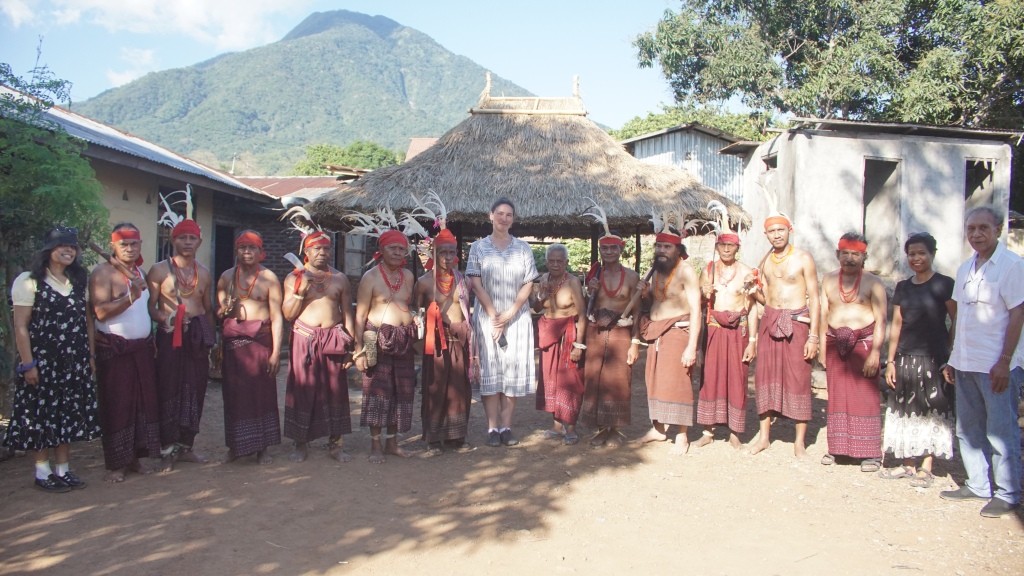
That is why the team visited the villages of Lewoloba, Waibao and Riangkroko in August 2026. There, it became clear that local residents hold knowledge that is not recorded in the archives: who sang, when songs were performed, what purposes they served and how traditions were passed down.
The recordings prompted both renewed performances and conversations about changing traditions. In the village of Riangkroko, the return also acquired a personal meaning: a descendant of one of the singers on the old recording heard his grandfather’s voice for the first time.
‘Digitisation is only a first step,’ says Titus. ‘An archive only truly comes to life when it encounters the people still recognise the language, poetry, music and traditions it contains. What matters most is not technology, but relationships. The aim is not to determine how traditions should be restored, but to give communities the space to decide for themselves what they want to do with this heritage.’