Stop scrolling: SpaceTeen co designs a healthier social media timeline with young people
29 July 2026
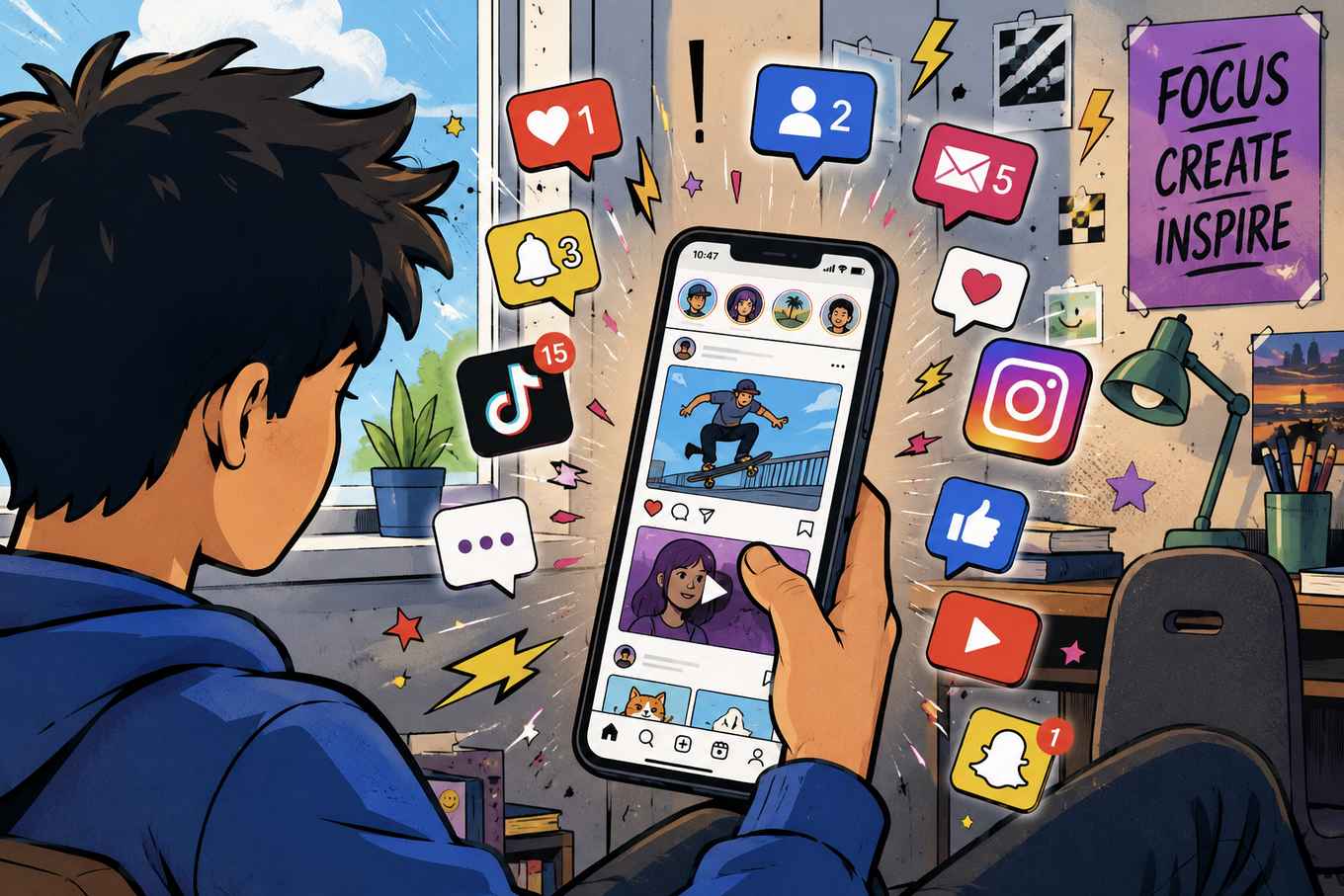
These design sessions are part of the broader SpaceTeen project. In SpaceTeen, researchers, designers and young people work together towards a social‑media environment that works for you rather than against you: less distraction, more room and support for what you think is important.
Young people struggle with their social media use
Sindy Sumter is Associate Professor of Communication Science and the project lead for SpaceTeen. In her lectures, she noticed that students increasingly said they use social media too much yet find it hard to stop. That struggle prompted the question: how can we support young people and redesign social media itself? Together with designer Marcel Schouwenaar, this idea grew into SpaceTeen – a large consortium of youth and media researchers, designers, civil‑society organisations and companies.
At SpaceTeen, designing for young people means designing with young people. Sumter explains: ‘Young people have a right to a say in the (digital) environment in which they grow up – including their social media. And if you really want to understand what works, you have to talk to young people and design with them. Otherwise, you end up creating a solution that nobody uses.’
What’s wrong in current social‑media design
Scrollternatives is one of SpaceTeen’s pilots. This project is in collaboration with digital design agency TodayTomorrow and marketing agency YoungMedia. In this project, researchers, designers and young people look together for design choices that can replace current, addictive elements.
Sumter lists the addictive elements in the current design of social‑media platforms:
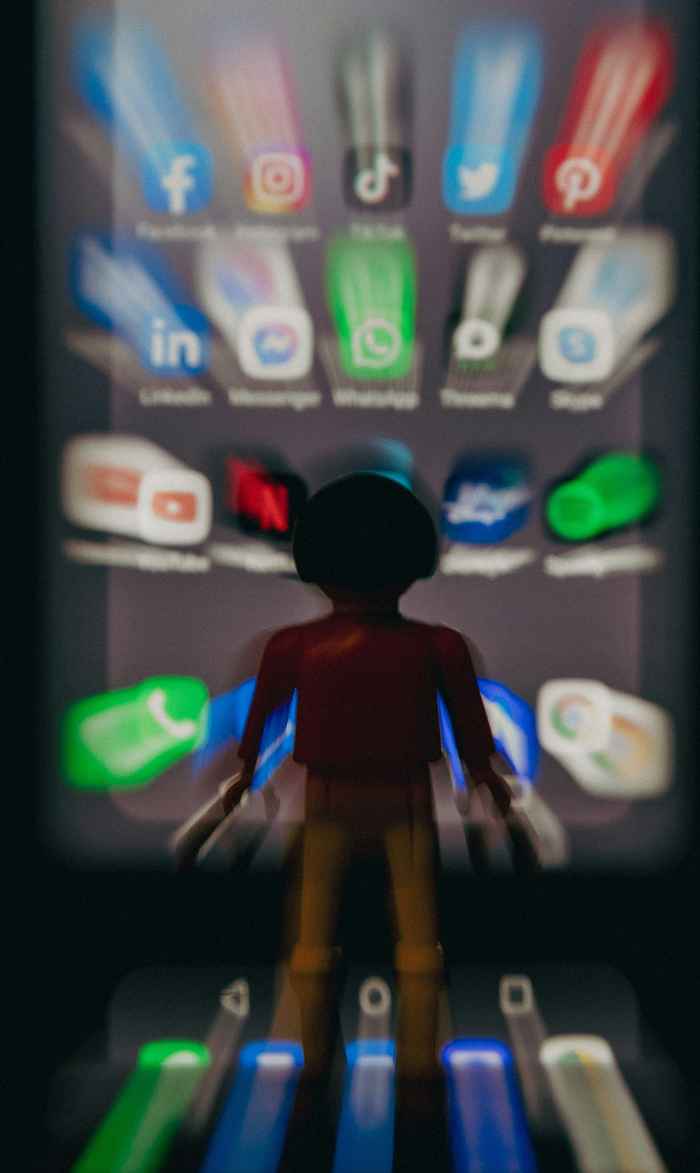
- Infinite scroll: The feed never ends. There’s no natural moment to pause or do something else.
- Autoplay: The next video starts automatically. You don’t have to do anything to keep watching.
- Notifications on by default: Apps are set up to grab your attention as often as possible. You can change this, but the settings are hard to find.
- Reward structure: Among many ordinary videos, every now and then there’s exactly the video you love. That’s not an algorithmic error but the point: you keep scrolling because ‘something good might pop up any moment’.
- Highly stimulating design: Bright colours, moving elements – everything geared towards capturing attention.
Sindy sees opportunities for change: ‘It’s easier to adjust the design of a handful of major platforms than to regulate the content of billions of posts and comments.’
Co‑design sessions with students
That’s why Scrollternatives focuses on the design layer. On behalf of the digital design agency TodayTomorrow, strategic UX designer Lisa van de Merwe and graduation intern Tim van Cappellen led a series of sessions with students from the Grafisch Lyceum Utrecht.
Tim noticed how ambivalent social media are for young people:
On the one hand, they offer knowledge, opportunities, inspiration and a space to show who you are. On the other, smart design tricks hijack your attention and exploit your curiosity. Managing them in a healthy way is therefore a huge challenge for studentsTim van Cappellen
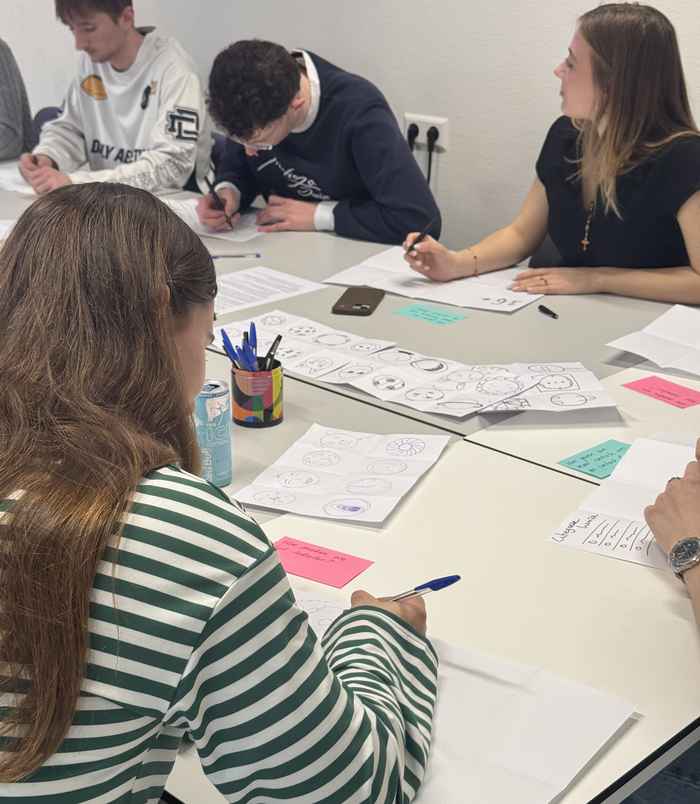
In the first session, Lisa and Tim explored with the students what they see as the good and bad of social media. Based on that, they created a shared future vision with wishes such as:
- more time awareness
- more calm (fewer stimuli)
- more honesty (less fake, more real)
- more control for the user
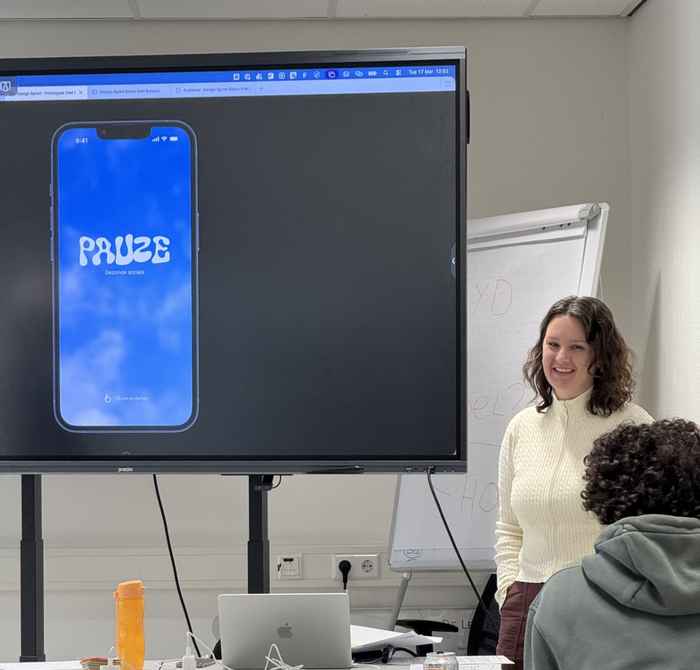
The students then developed ideas in small groups. They made sketches (wireframes) and worked with Tim and Lisa on interactive prototypes. An important idea was to work with session‑based screen time and a background that shifts from day to night the longer you scroll.
We came up with breaking screen time into sessions: you set your total time yourself, but use it in blocks. If you then get a notification saying “your 15 minutes are up, do something else”, you notice you stop sooner rather than mindlessly scrolling onos weer verder te scrollenRidouan, student of the Grafisch Lyceum Utrecht
In addition to daily budgets for session‑based screen time, the students also devised a background that changes from day to night the longer you scroll, a feed that blocks after your scrolling time while chat remains available, and a timeline featuring more people from your own region.
If your feed focuses more on your own region, it becomes much easier to get to know people nearby and to carry online contact over into life offlineMitchell, student at the Grafisch Lyceum Utrecht
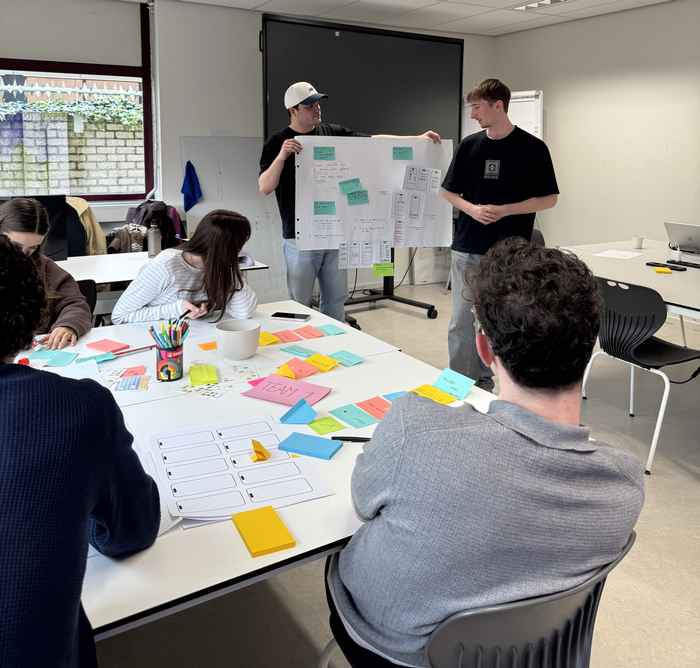
What the design sprint sparked in young people
Lisa and Tim were most struck by how deeply social media are interwoven with young people’s daily lives – and how well young people themselves understand how platforms work.
The way young people switch from one thing to another: watching a series or gambling online in a ten minute break, and moving effortlessly from Instagram to TikTok and back again. That shows how deeply screen use is embedded in their routineLisa van de Merwe
Because there is a clear generation gap, Lisa and Tim didn’t pretend to understand that world completely. They showed, for instance, their first mobile phones and made it clear from the start: you are the experts of your own online lives. What did the students themselves learn?
I now pay much more attention to privacy: from reading carefully what I’m asked to accept to checking the privacy policies of the apps I use oftenMitchell, student at the Grafisch Lyceum Utrecht
Mitchell’s experience shows that the design sprint not only yields new concepts but also changes young people’s awareness. The multiple sessions fostered real trust: ‘From hanging back at first to making inside jokes and being greeted in the hallway,’ Tim says. ‘When I’m scrolling too much again, I can see Tim in front of me,’ Ridouan adds jokingly.
Aware of the downsides of their own use
Looking back on the design sessions, Sumter was struck by how clearly young people see the downsides of their social‑media use themselves and how keen they are to change it. ‘They were very clear that they want less busyness, calmer colours and slower content, because they often feel overstimulated and lose track of time. Young people struggle just as much as adults to find a solution.’
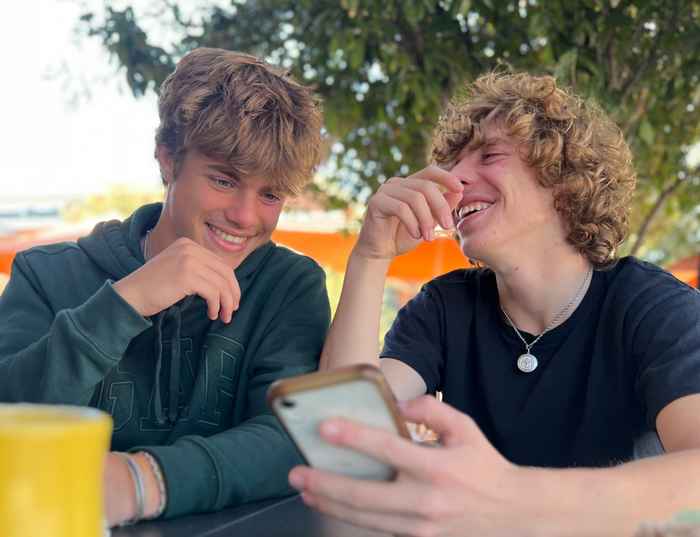
The split between entertainment and communication on platforms also came across clearly. ‘The idea of timers that stop the entertainment feed when the limit is reached, while direct messages remain available, is telling. Stopping social media altogether is hardly an option, because it’s also their main way of staying in touch with friends,’ Sumter explains.
Default settings should be protective According to Sumter, the problem won’t be solved with a single clever tweak to a timeline: ‘You can come up with a smart timer or feed blocker, but on its own it won’t solve the problem. Young people will always find ways around it or switch to another app.’
More effective, she argues, is to tackle platforms’ default settings: ‘The default for social media should be calm and protection for your attention; from that point young people can consciously choose to make it more stimulating. At the moment it’s the other way round: everything is set to maximum by default, and we expect young people to switch tools off themselves – that’s simply unrealistic.’
What’s next?
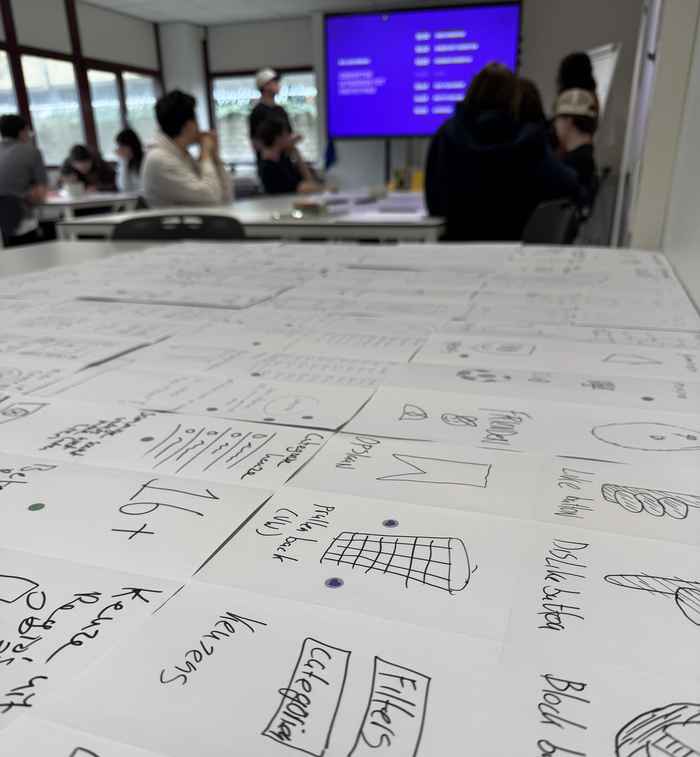
The first findings are available in the first ScrollReport Short. And this summer, TodayTomorrow, together with Sumter, communication scientist Lise‑Marie Nassen and other researchers, will set to work to convert all the ideas from the design sprints into a single, testable prototype for a design feature. This practical focus makes SpaceTeen unique: young people are no longer just the target group but co‑designers of the online environment – one that helps them reclaim their own feed, and with it their own time and attention.
SpaceTeen is also exploring other ways to break the current impasse around social‑media use. The team is looking not only at how time on social media can be improved by adapting the platform itself, but also at how screen time can be reduced using a screen‑time tool or inspiring role models. In addition, they are exploring how the appeal and availability of physical spaces can be strengthened, so that these offer a stronger counterweight to social‑media platforms.
About Sindy Sumter
Sindy Sumter is Associate Professor of Communication Science at the University of Amsterdam. Her research and teaching focus on the interaction between young people and their media use: how media affect their social development, self‑image and school performance. She teaches courses on youth, media and technology, and supervises Master’s students researching media effects and (social) media technology. Within SpaceTeen she works with UvA colleagues Lise-Marie Nassen, Susanne Baumgartner, Amber van der Wal en Rusen Tanribilir.