Children without legal residency status are introduced to university life
29 September 2026
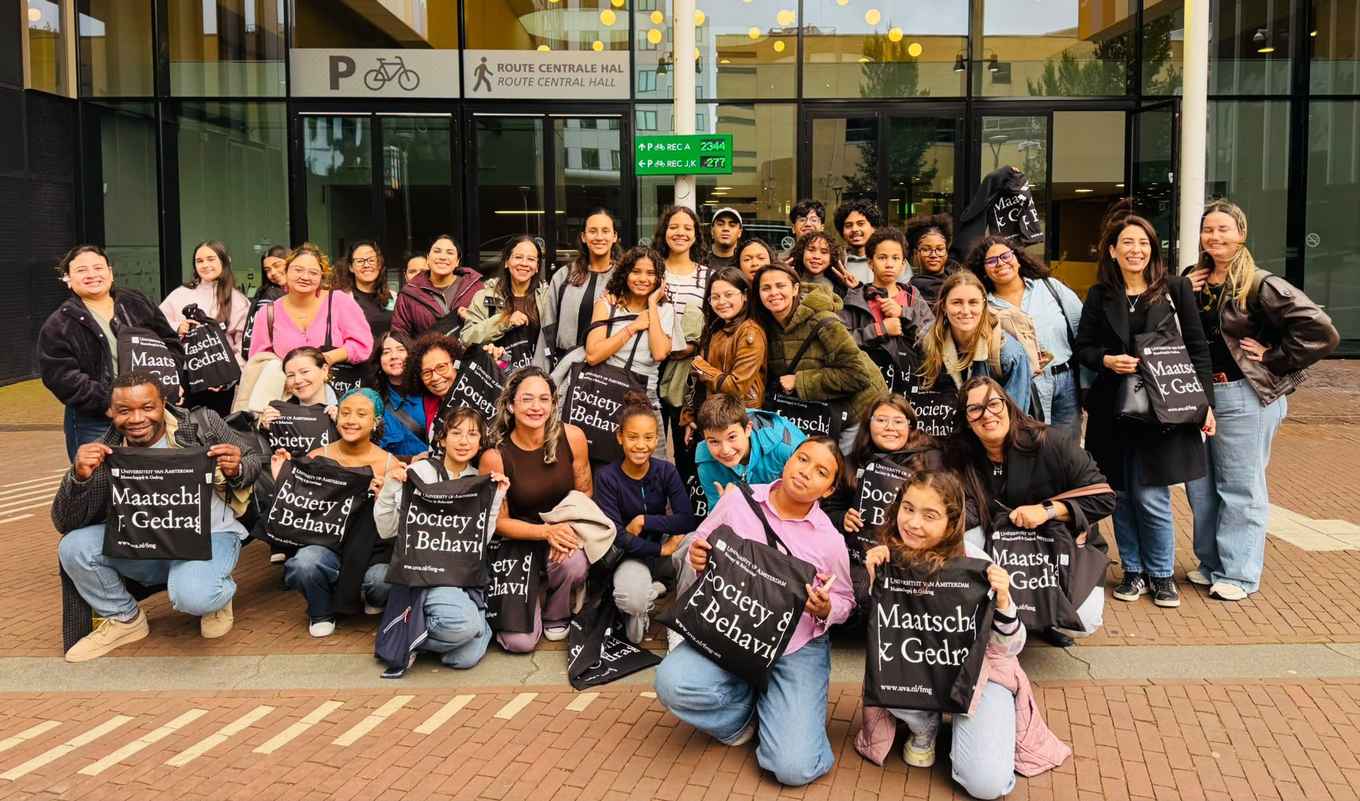
‘As a university, we want to be there for society as a whole,’ says Christa Boer, dean of the FMG. ‘That is precisely why I believe it is important to open our doors to children and parents for whom university may feel less accessible or familiar. Everyone deserves the opportunity to discover what is possible and to receive guidance along the way. It is wonderful that we can contribute to that with a day like this.’
‘There are often more possibilities than parents realize’
The children and their parents received a great deal of practical information, including about the difference between a bachelor’s and a master’s degree and what studying at a university involves in practice. They also learned about the opportunities for undocumented young people to continue their education and the support available to them, such as options for studying at a university of applied sciences or a research university with a student residence permit. Misha van Schendel of Human Rights Initiatives said: ‘For undocumented young people, the path to further education can sometimes seem complicated or even closed off, when in fact there are often more options than they and their parents realize. That is why it is so important for them to know what opportunities are available and where they can turn for help. Above all, I hope they go home today feeling that there are pathways available and that they do not have to figure them out alone.’
Experience what it's like to be a scientist
The children also had the opportunity to experience what it is like to be a scientist. During an interactive mini-lecture, Eddie Brummelman, Associate Professor of Child Development and Education, introduced them to his research on how children grow up in an unequal society. What do children think about the fact that some people have far more money and opportunities than others? When do they consider this inequality fair or unfair? And how can research contribute to a more just society?
Eddie Brummelman: ‘What I like about a day like this is that pupils realize their ideas matter and that science is committed to the next generation. By asking questions and conducting research together, I hope they also come to understand that science is something we do together. Who knows where such a first encounter might lead later on?’
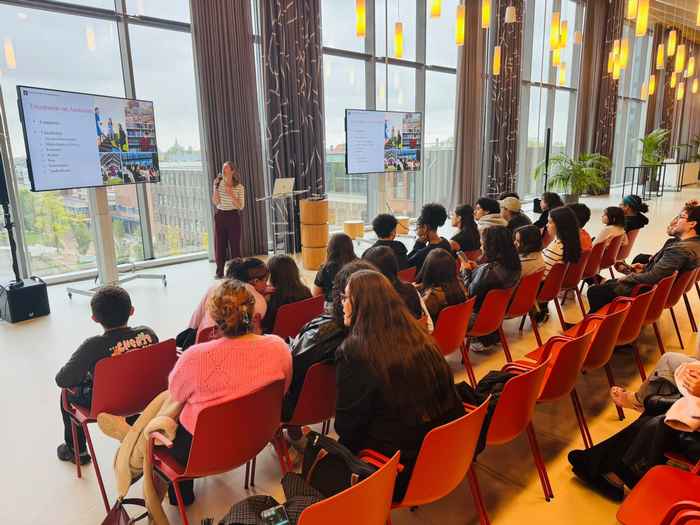
Also time for parents' questions
While the children explored science, deliberate attention was also given to their parents. In a small, safe setting, Christa Boer (Dean of the Faculty of Social and Behavioural Sciences), Marrit van de Guchte (Programme Director of the University Teacher Training Programme for Primary Education) and Elien ten Broeke (Student Information, Communications Office) gave parents the opportunity to ask questions about studying, the university and the options available to their children. ‘We want to show pupils and their parents just how many opportunities there are. Sometimes, a single introduction can be enough to broaden your perspective on the future,’ says Elien ten Broeke. Marrit van de Guchte adds: ‘What I found particularly special were the brief conversations with the pupils and their parents over coffee. They spoke very tentatively about their dreams: becoming a psychologist or a palaeontologist. It is precisely in those small conversations that you see how valuable it is to introduce young people to the opportunities a university can offer.’