AI is changing democracy: now is the time to make choices
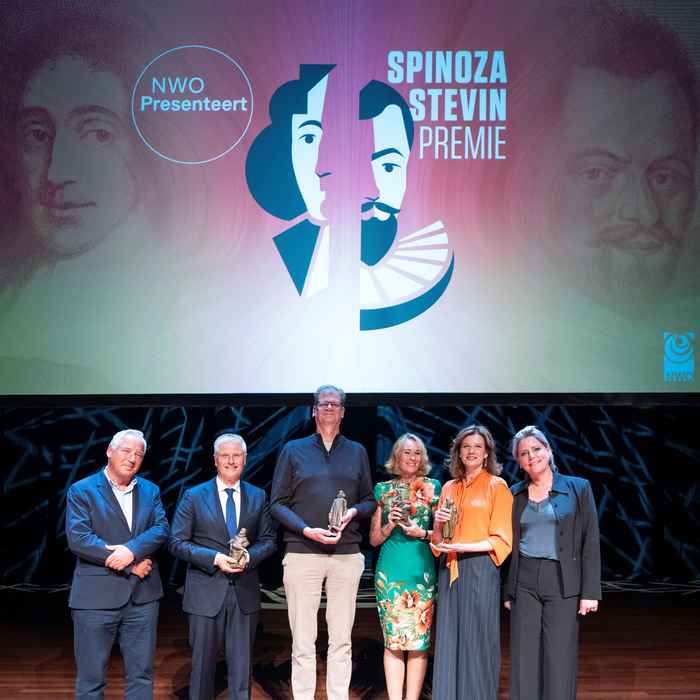
With the NWO Stevin Prize, Claes de Vreese will study how AI is changing our information environment and what that means for our democracy.
7 October 2026
Legislation and regulation around AI is a particular challenge, De Vreese explains. ‘In almost every part of our democracy we have clear “ground rules”. We have agreements about elections, about setting up a political party, about what is and is not allowed on television. But now we suddenly have a gigantic new space in which AI, but also social media, can basically do as it pleases without too many rules. Who, for example, is responsible if an AI system spreads misleading information? What data is such a system allowed to use? And how do we make sure that people can still trust the information they encounter online?’
The concentration of money, technology and political power is now greater than ever.
The power behind AI
In recent years, many people have become more worried about AI. That is not surprising, says De Vreese. ‘The real tipping point came at the end of 2022. With ChatGPT, everyone suddenly got access to generative AI and since then developments have moved incredibly fast. The number of users grew much faster than it ever did for platforms like Facebook. The concentration of money, technology and political power is now greater than ever. In the past we already saw this with Berlusconi and the Murdoch family, but that was on a much smaller scale.’
The Netherlands and Europe can still choose a way of working with AI that fits our public values.
Europe can still choose
Even so, De Vreese does not think it is too late to step in. ‘The Netherlands and Europe can still choose a way of working with AI that fits our public values, such as human rights and privacy. That does not have to stand in the way of innovation; I would really like to get away from the idea that we have to choose between new technology or ethical rules. Europe can innovate perfectly well and at the same time set conditions on how we develop and use AI as a society. It is time to move faster – in a responsible way.’
Freedom to act quickly
For De Vreese, the Stevin Prize mainly brings freedom: the money is not tied to one pre-planned research project. ‘That flexibility is incredibly important in this field. When a new technology, social development or unexpected event calls for research, this prize allows us to act quickly. Normally there can be as much as a year and a half between applying for a grant and starting a project. In AI research, so much has changed in that time that it is hardly manageable.’
Young scholars are often so creative and eager to learn. For me, supervising PhD candidates and postdocs is really the most meaningful kind of impact there is.
Big questions need more than one perspective
‘In my research I have always worked as part of a team; I am not the kind of scholar who works on their own. Research on AI, technology and democracy also demands collaboration across many disciplines: communication science, the behavioural sciences, but also legal, political and technical expertise are crucial.’
Interdisciplinary and international collaboration therefore comes naturally to De Vreese – as does working with early-career researchers. ‘Young scholars are often so creative and eager to learn; for me, supervising PhD candidates and postdocs is really the most meaningful kind of impact there is.’
We are not going to spend five years doing research in our own bubble and then come outside to explain to everyone how the world works.
From DPG to the European Commission
Practice partners are also a permanent feature of the work done by De Vreese and his colleagues in the AI, Media & Democracy Lab. ‘We have already carried out projects with various media partners, such as DPG, RTL and the NPO. We also work with regulators, the Ministry of the Interior and the European Commission. This prize will only strengthen that. The last thing I want is for us to spend five years doing research in our own bubble and then come outside to explain to everyone how the world works. Partners are really part of the research process.’
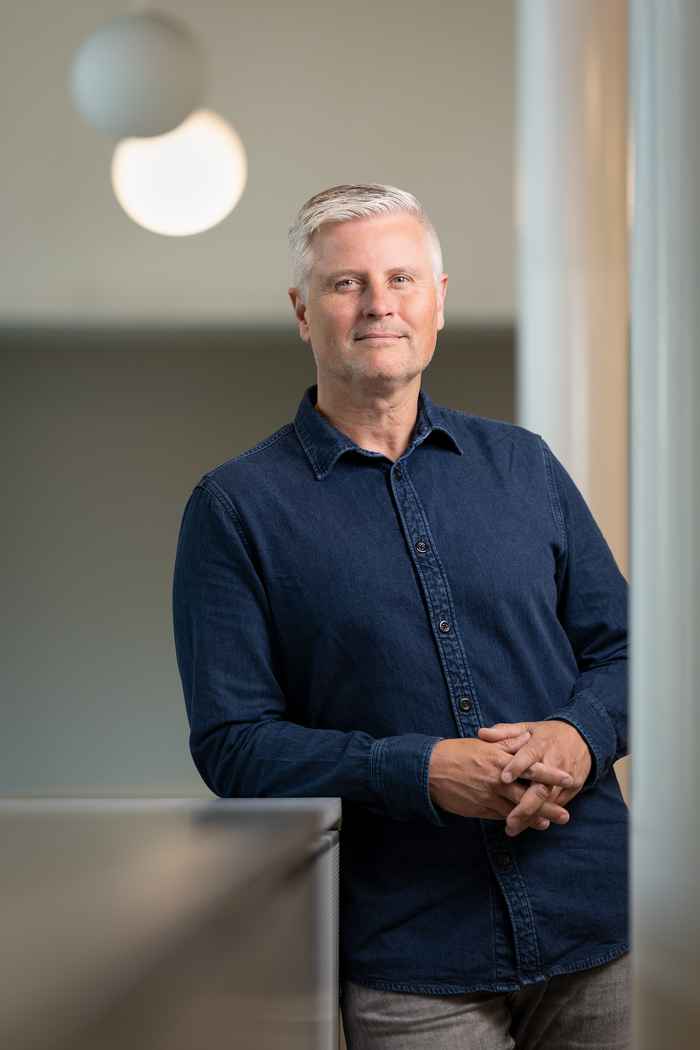
Since 2021, Claes de Vreese has been University Professor of AI and Society, with a particular focus on media and democracy. He is affiliated with the Amsterdam School of Communication Research (ASCoR). De Vreese is one of the founders of the AI, Media & Democracy Lab, established in 2021, in which researchers from the UvA, AUAS (HvA) and CWI collaborate with media partners, civil-society partners and the City of Amsterdam. Together with Prof. Natali Helberger, he is also co-director of the Gravitation programme Public Values in the Algorithmic Society. In addition, he is affiliated with the Danish Institute for Advanced Study (DIAS) and is academic director of the Digital Democracy Center at the University of Southern Denmark.