‘We need people who will continue to uphold international law’
Professor Göran Sluiter looks back on 20 years of international criminal law
25 August 2026
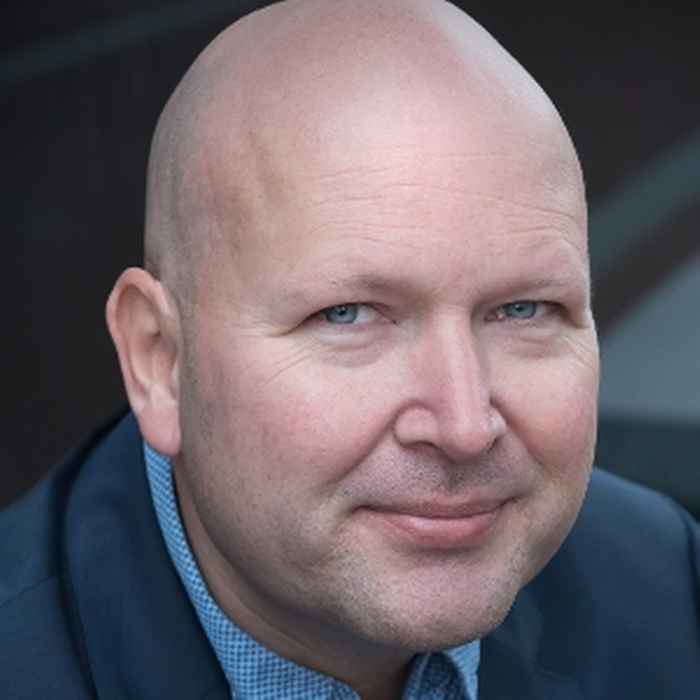
No time wasted
It’s an odd feeling for Sluiter that his working life is coming to an end. ‘It puts things in perspective. Nobody is indispensable,’ he says. But despite having metastatic rectal cancer, he remains in good spirits. ‘You could sit at home all day thinking it’s unfair, but that’s a waste of time. Above all, I’m grateful for the time I have, and I’m enjoying my family and keeping in touch with friends.’ At home, surrounded by metre-long shelves filled with LPs and an impressive set of speakers, Sluiter looks back on his career.
Did you always want to be a lawyer?
‘At secondary school, I wanted to go into music, but my talent as a guitarist and singer wasn’t quite up to it. I played bass guitar in punk bands – the easiest instrument to play. So I soon realised music wasn’t my biggest talent. I did carry on listening to a lot of music, though. I have a valve amplifier at home – not many people know what that is anymore. That way I can listen to people who play better than I do. After secondary school, I first studied French language and literature in Dijon. But that wasn’t quite right for me either. I was eventually drawn to law because, even as a student, I was already very involved in human rights.’
How did your career in law begin?
‘The same way it begins for everyone else after graduating: by applying for jobs. I even interviewed with Shell for a position as a corporate lawyer, but it’s just as well that didn’t work out. It didn’t suit me at all. At that stage in your life, you’re often still trying to find your way. In Utrecht, I eventually embarked on a really great PhD programme. From that moment on, I’ve stayed with international criminal law, and that’s how I ended up at the University of Amsterdam.’
I’ve noticed that students are much more hopeful and positive. They’re concerned about the world and want to do something about it.
Has much changed in your field?
‘A great deal. When I was doing my PhD, the International Criminal Court hadn’t even been established yet. The prevailing view back then was: don’t waste your time on international criminal law; it’ll never amount to anything anyway. But the Yugoslavia Tribunal and the Rwanda Tribunal achieved so much. At the moment, international law is having a tough time. It’s difficult when a major country, the United States, deviates so drastically from international law. There’s a pessimistic atmosphere surrounding international law: who still adheres to it?’
‘But we need people to defend the law. We must carry on. Many countries support international law and make genuine contributions. For example, legal experts are currently working very hard on the Ukraine Tribunal. I’ve noticed that students are much more hopeful and positive. They’re concerned about the world and want to do something about it. That’s wonderful and important. It would be wrong for a lecturer – or anyone, for that matter – to say that it’s no longer worth the effort. Of course, we must highlight problems. But ultimately, the law is important enough to keep protecting.’
You regularly speak out in the media, in recent years particularly about Gaza. Why do you think that’s important?
‘My view is that this is part of a scholar’s job. Who else should people turn to for interpretation and explanation? There is so much misinformation. When you watch a talk show, you should be able to trust that sensible people are sitting at the table. Unfortunately, that isn’t always the case. I feel the need to make my voice heard, even though I actually consider myself better at writing than speaking. My colleague Marieke [de Hoon] has more talent for that. I do my best to explain the law as clearly as possible.’
Looking back, would you have made different choices in your career?
‘No. That might sound strange, but I’ve had so many opportunities, and I’ve been so fortunate in the opportunities that have come my way. I became a professor at 35, which is extremely young. Now I see people who are brilliant at what they do, but who have to wait much longer. I also really enjoyed combining my work with practical experience. I worked as a deputy judge and then spent some time as a lawyer. For example, I defended Somali pirates, represented the victims in the Wilders case, and, together with my colleague Liesbeth Zegveld, pressed charges against Jorge Zorreguieta, Queen Máxima’s father. The only thing I regret is that my work-life balance wasn’t always ideal. There were times when I worked too hard and could have spent more time with my family.’
What are you most proud of?
‘Definitely the people. The good relationships, the enjoyable projects and the collaborations. That’s what I’ve enjoyed the most. Of course, there were also conflicts and you sometimes disagree. But that’s the strength of the University of Amsterdam: even though people can be very tough and critical, there’s also a great deal of warmth. The UvA really is where I belong. I’m also very proud of the PhD students I’ve supervised. There are now 20 of them. I really enjoyed doing that. The most important thing is that you can inspire one another and build trust. It’s not that difficult to point out everything someone is doing wrong. But it’s incredibly important that you can say: “This is a great plan.” That’s when you see a spark ignite. As a lecturer, you have a massive influence on the atmosphere.’
Of course, there were also conflicts, and you sometimes disagree. But that’s the strength of the University of Amsterdam: even though people can be very tough and critical, there’s also a great deal of warmth.
What advice would you give to students who are yet to start their careers?
‘Enjoy. I’m very enthusiastic about the qualities I see in students. Seize the opportunities that are available to you and don’t be too hard on yourself. You might suddenly discover a new path. Ultimately, you also need to ask yourself: do I enjoy working here? You’ll find your place. In that respect, I’m a real dinosaur – after all, who stays at the University of Amsterdam for so long? But I have no regrets. It’s a lovely place with wonderful people.’
Another important question: what music would you recommend to your colleagues and students?
‘Great question! There’s so much to choose from. I’m a huge fan of The Cranberries; think of songs like ‘Linger’, ‘Zombie’ and ‘You and Me’. And R.E.M.’s Document album, featuring the track ‘The One I Love’.’