In memoriam Göran Sluiter
30 December 1970 – 21 September 2026
23 September 2026
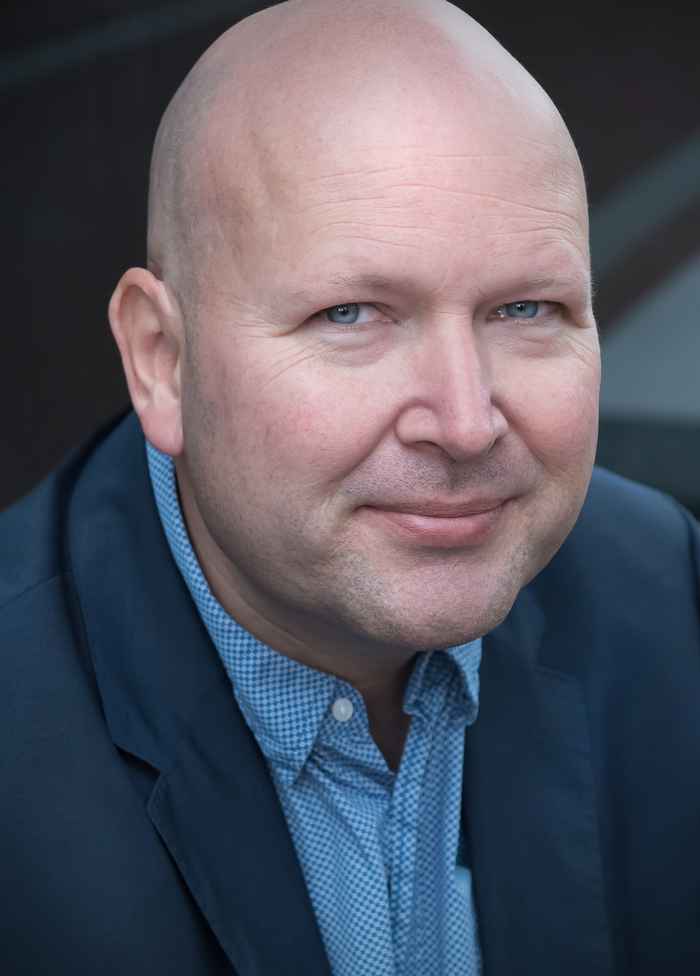
Göran studied in Maastricht in the early 1990s, followed by a doctoral programme in Utrecht, which he completed in 2002 with a dissertation titled “International Criminal Adjudication and the Collection of Evidence: Obligations of States.” This study highlighted Göran’s motivation from an early stage: he wanted to contribute to improving international criminal law, not as an end in itself, but to thereby strive after justice for victims of international crimes.
In 2004, Göran joined the UvA, first as an associate professor, followed in 2006 by an appointment as full professor of International Criminal Law, with a particular focus on international criminal procedure. At the UvA, he was fully committed to his students, his research group, the faculty, and to strengthen the field of international criminal law globally.
During his more than 20 years as a professor in Amsterdam, Göran has created many valuable contributions that will continue to be significant for a long time to come. Together with colleagues such as Bert Swart, Harmen van der Wilt, Sergey Vasiliev, Jill Coster van Voorhout, and many others, he made the UvA a world-leading center for the study and promotion of international criminal law. He was a pioneer in the field of international criminal law education by establishing the Master’s programme, through which he trained many generations of students from around the world, who, despite international opposition, will continue to fight for the application and strengthening of international law.
Göran also served as the supervisor to 20 doctoral candidates and mentored and supported dozens of other young researchers who, in his footsteps, will continue to advance the field for decades to come. Moreover, anyone who asked could expect a sharp review and constructive feedback on their research and writing. He was also a driving force behind a stimulating and innovative research culture; particularly since 2020 within the Amsterdam Center for Criminal Justice, which he helped establish.
Göran held many administrative roles. For example, he was a member of the University Research Committee, a member of the faculty’s Standing Committee on Professorial Appointments, and Director of ARILS, the faculty’s Amsterdam Research Institute for Legal Studies. In these roles, he made a significant contribution to the research environment and was always engaged with the broader challenges facing the faculty and the university.
He continued to demonstrate his love for teaching right up until the very end. He conveyed his passion for the field to students through lectures and one-on-one conversations. In this way, he helped them understand that the field is challenging—both intellectually and emotionally—yet at the same time valuable and important. And he inspired fellow faculty members with his conviction that education is central to our calling as scholars: passing on knowledge, expertise, and passion to new generations. His central message was that we, together, must protect international law.
Driven by this motivation, Göran also dedicated himself to international criminal law practice. He served as judge at the District Court of The Hague in various genocide cases, among others, and worked as an attorney and partner at the human rights law firm Prakken d’Oliveira. In that role, he represented victims and defendants in cases involving international crimes and human rights violations before the International Criminal Court, the Cambodia Tribunal, and our national courts. That practical experience gave his teaching and publications a unique depth, always keeping in mind the people whom criminal law is meant to protect.
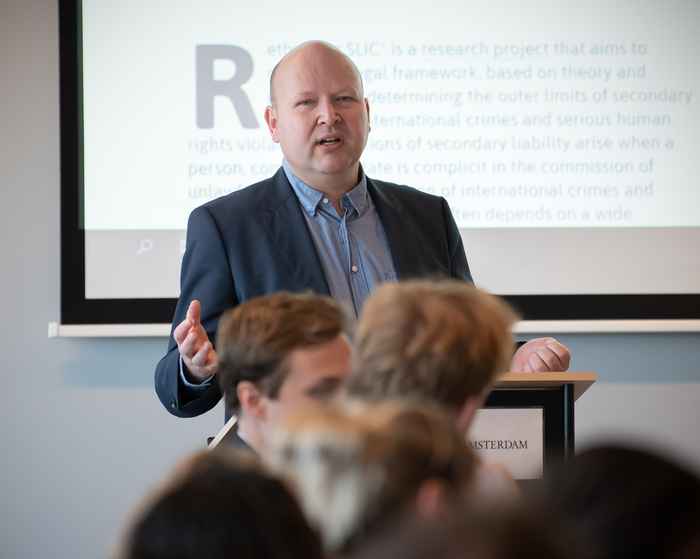
Göran could be sharp and outspoken, driven by a fundamental sense of justice. For example, to fight for the integrity of criminal investigations, and of the importance of education within the faculty, or to safeguard international law against political opportunism. But he also had gentle and vulnerable sides that endeared him to everyone who got to know him. His work was important to him, but his love for his family, cycling, music, and football team AZ, as well as his genuine interest in everyone around him, was always an integral part of everything he did professionally.
Although Göran could easily put himself aside for the sake of the groups in which he was active, he was an eminent scholar with 248 publications, a unique, incisive writing style, and recognition for his innovative research through grants such as the Dutch Research Council grants VIDI and VICI. In recent years, as international (criminal) law was gradually being eroded, Göran always spoke out to draw public attention to the need to take a stand—against the genocide in Gaza, the war in Ukraine, or the U.S. attacks on the International Criminal Court.
More than 5 years ago, Göran announced that he had been diagnosed with cancer. The years that followed were marked by ups and downs, by hope and disappointment, which he shared with a small circle of friends and colleagues around him. He refused to give up and even volunteered to take over criminal law lectures as recently as May of this year.
But shortly thereafter, it became clear that the disease had come back, and there would be no more ups. On 29 May, Göran announced that he would not be returning to work. In his final months, he was still able to fully enjoy the company of those who visited him or accompanied him to his beloved AZ.
We will miss Göran. His legacy at the UvA and beyond, and our personal memories of the extraordinary person and scholar he was, will remain.
Marieke de Hoon and André Nollkaemper