PhD research brings optimisation to cancer treatment
7 October 2026
Zihang was supervised by Prof. Dick den Hertog (Science-to-Impact director of Analytics for a Better World, Amsterdam Business School) and Prof. Thomas Bortfeld (Harvard Medical School/Massachusetts General Hospital), combining expertise in optimization with world-leading expertise in proton therapy. The PhD project was funded by the Marie Skłodowska-Curie project RAPTOR (Real-time Adaptive Particle Therapy of Cancer), a European research programme aimed at advancing real-time adaptive particle therapy for cancer.
Optimisation problem
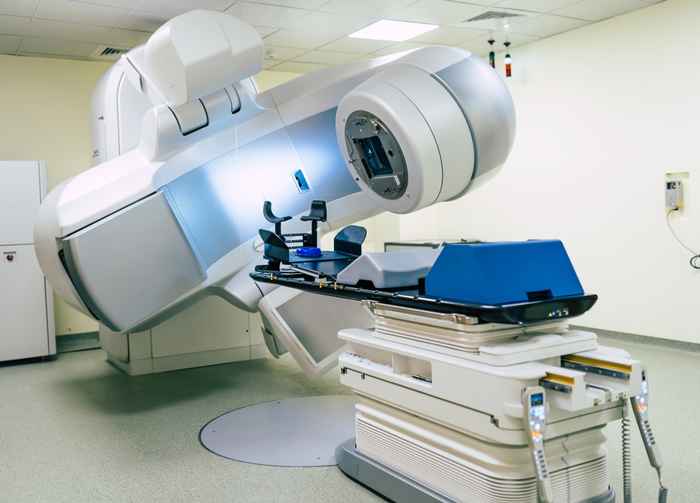
Proton therapy is a highly precise form of radiotherapy. Treatment planning involves deciding how radiation should be delivered so that the tumor receives the required dose while radiation to surrounding healthy tissue is minimized. This is a challenging optimisation problem, particularly because a patient’s anatomy may change during treatment and because of other uncertainties affecting the delivery of proton beams.
Zihang developed new optimisation approaches for dealing with these uncertainties. His thesis includes methods for online adaptive treatment planning, where the treatment plan can be re-optimised while the patient is on the treatment table; a new K-adaptability (optimisation under uncertainty) approach to robust treatment planning; and methods for determining the optimal moment to replan a treatment as a patient’s anatomy changes.
Combining business analytics and healthcare
This is a particularly special PhD topic for a Business School: mathematical optimization, a core methodology within Business Analytics and Operations Research, is applied here directly to one of the most technologically advanced forms of cancer treatment. It illustrates how research originating in a business school can reach far beyond traditional business applications and contribute to healthcare and potentially to better treatment for cancer patients.