Open Science Award 2026: podcast Net Echt
24 August 2026
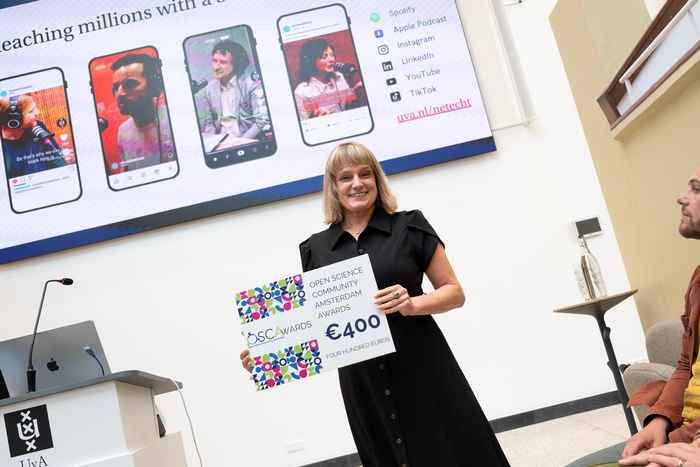
How does your project make science concretely more open or accessible [than before this project]?
Science communication adviser Karen Kraal: "As science communicators at the University of Amsterdam, we produce a great many compelling stories about research every week, but we did not yet have a UvA podcast. And podcasts are a wonderful medium — one that more and more people are turning to — for discussing science in greater depth. That is quite different from a 300-word press release or a short clip on Instagram. By using popular culture as a bridge, we also make science more accessible."
Who does this project reach or give a voice to, that previously went unnoticed?
"A podcast reaches different people than, say, a news article in the Volkskrant. We target people who want to know more about science, but also people who are drawn in by the film or series — a different entry point. Because you might be a huge fan of Gladiator and curious about how historically accurate the film actually is. And we share short clips on LinkedIn, TikTok, Instagram and YouTube, which have already been viewed millions of times."
What was the biggest challenge you encountered — and how did you address it?
"We have no shortage of compelling stories and enthusiastic researchers, but making a podcast was something we had no experience with. Fortunately, around the time this idea for Net Echt came about, a new colleague joined our team who had worked at NPO and had exactly that experience. Everything came together at the right moment, and thanks to access to the TLC studio, the technical side fell into place as well."
If other researchers were to take away one thing from your project tomorrow, what should it be?
"The joy and enthusiasm of sharing your knowledge. Do think carefully about with whom you want to share that joy and enthusiasm, so that you ensure your story connects with the interests and world of experience of your audience."
Open science is a collective effort; behind this project stands a team. Karen Kraal works on this together with:Kris Sloot, Pam Ackermans, Aron de Jong, Peter-Paul Verbeek & Lisa Maier (University of Amsterdam (UvA), Communications Department, Faculty of Humanities, Executive Board)
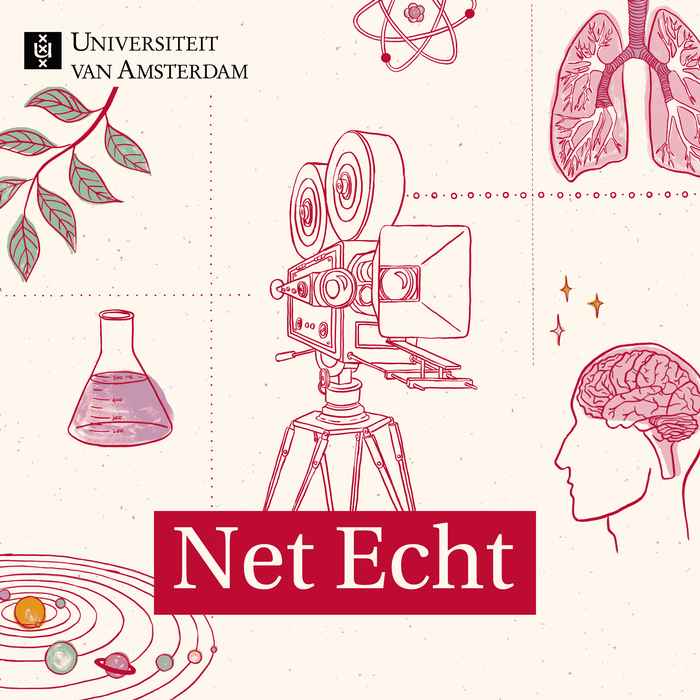
Net Echt is the University of Amsterdam's podcast that examines films, series and pop culture through a scientific lens. Net Echt aims to make academic knowledge freely accessible to a broad, non-specialist audience through engaging audio storytelling, whilst also bridging disciplines — with episodes in which researchers from different fields often analyse a film or television series together.
Created by: Kris Sloot, Pam Ackermans, Aron de Jong, Peter-Paul Verbeek, Lisa Maier and Karen Kraal.