Future Society goes on a field trip to Panoven, Zevenaar
By Jaap Rothuizen
22 September 2026
Despite a delayed start, we were warmly welcomed by Reindert Augustijn in the Statenzaal of the provincial government building in Arnhem – precisely the place where agricultural policy is discussed and where, a day later, farmers would be protesting outside with their tractors. After a brief introduction, we set off for Zevenaar, where the focus shifted from policy-making to day-to-day agricultural practice.
The students had carefully prepared their interviews in advance. Naturally, this involved the content: what challenges do farmers face, and what opportunities do they see for sustainability and nature-inclusive agriculture? But it also covered methodology: how do you have an open conversation with someone who thinks differently about agriculture or nature than you do? And how do you build a good relationship – or rapport – with the person you’re talking to?
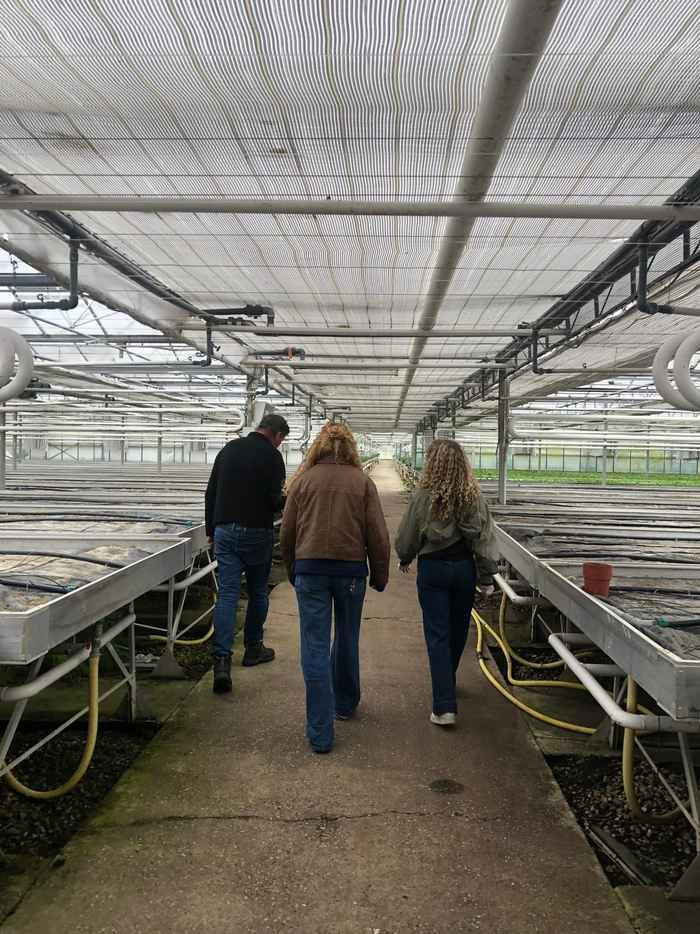
Armed with raincoats, notepads and plenty of questions, the students set off to explore the local area the following day. Just like the weather, it turned out to be a day of ‘four seasons in one day’. The farms they visited varied widely: from pig farms and conventional dairy farms to an organic market garden and an oyster mushroom farm. The tone of the conversations also differed. Students were often welcomed warmly and openly, but sometimes also encountered conservative views and, unfortunately, openly racist remarks. These differences highlighted the diverse perspectives and tensions within agricultural practice.
The conversations also revealed many similar concerns and aspirations. Farmers find the volume of regulations complex and difficult to fathom; some even need external consultancy firms to make sense of it all. In addition, there is a strong need for clear and stable long-term policy. At the same time, farmers indicated that rigid rules and the fixed agricultural calendar leave little scope to respond to natural dynamics or local knowledge. They want more flexibility, trust and a say in policies that directly affect their work and businesses.
With a slight hangover here and there, the students presented their findings the following day to Weldmoed Rijpkema of Nature-Inclusive Agriculture Gelderland. She recognised many of the observations and emphasised the importance of local networks and collaboration. After two intensive days, the students returned to Amsterdam, with plenty of material to reflect further on governance and systemic change in agriculture. Fortunately, that is precisely the title of the module they are currently studying. And whilst policy and progress can sometimes get rather bogged down, this field trip showed that curious students are not so easily deterred.