New talents in climate research: Daniela Toribio Ramirez
“One of the main challenges for the energy transition is to have effective communication between people from different disciplines, perspectives, and interests.”
5 October 2026
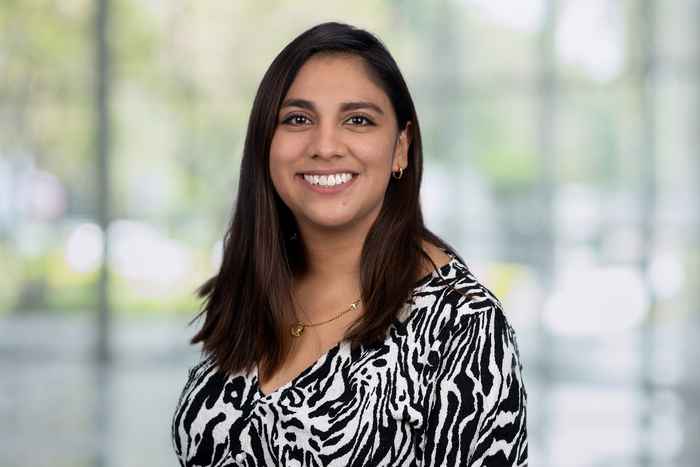
What does your research entail exactly?
“I develop quantitative models to project future costs, assess the conditions under which these technologies could become commercially competitive, and identify strategies that can accelerate their development and widespread adoption.
I chose these research questions because research on the energy and materials transition requires a systems perspective and knowledge from different disciplines, including economics, chemistry, and the social sciences (to name a few). I find this very motivating because it pushes me to keep learning, explore different perspectives, and understand how the different pieces fit together. This is what motivated me to choose this topic.”
What do you hope to achieve with your research?
“One of the aspects I enjoy most about my research is understanding complex ideas and concepts and explaining them to others. Through my work, I want to make a small contribution by helping people better understand the complex processes involved in developing an emerging low-carbon industrial technology from the R&D stage to a commercially available industrial process.”
Who do you work with?
“Day-to-day, I collaborate with other PhD candidates, postdocs, and researchers in the SET group. We have created a supportive, fun work environment where we help and encourage one another, exchange ideas, and organise outings.
What I find most interesting is the creative process that comes after developing a good understanding of the existing literature. I enjoy connecting ideas and insights from different studies, identifying gaps, and developing new research questions.
I also had the opportunity to work with external partners. Because my research group is led by Bob van der Zwaan, a Principal Scientist at TNO, I worked together during the four years of my PhD with researchers from TNO’s Energy & Materials Transition Unit throughout my four-year PhD. My research also allowed me to work with people from different disciplines. For one of my case studies on bio-based biodegradable plastics, I collaborated with researchers from Avantium and Professor Gert-Jan Gruter. In contrast, another case study on photo-electro catalysis involved collaboration with researchers from the Homogeneous, Supramolecular and Bio-Inspired Catalysis Group at HIMS.”
Which phase of the research do you find most interesting?
“What I find most interesting is the creative process that comes after developing a good understanding of the existing literature. I enjoy connecting ideas and insights from different studies, identifying gaps, and developing new research questions. For me, connecting the dots and coming up with new research ideas is the most interesting part of research.”
What is the most challenging aspect of the research stage you’re in now?
“I am now in the final stages of my PhD, writing the last chapters of my thesis. I am grateful to have the opportunity to reflect on the past four years. I am thinking about what I have accomplished, what I have learned, and how my research fits within the broader literature. It is a valuable opportunity to step back and see how the different pieces of this work come together.
Being hopeful means believing that our current circumstances can change for the better, while also recognising that we have a role to play in making that change happen.
The main challenge I am facing at this stage is wrapping everything up within the time I have left. It can be difficult to stop exploring new ideas and focus instead on summarising and drawing conclusions from the work I have already done. Fortunately, I have very supportive supervisors who help me stay on track and are always willing to meet with me to discuss and organise my ideas.”
What character traits are you most proud of?
“I consider myself a very hopeful person. Being hopeful means believing that our current circumstances can change for the better, while also recognising that we have a role to play in making that change happen. We can help shape the future through the choices we make. Having perspective matters in my field. The energy transition is a complex challenge, and progress can sometimes feel slow. If we lose hope that things can change, we also lose the motivation to keep working towards a better future. Change is possible, and even small contributions can have an impact.”
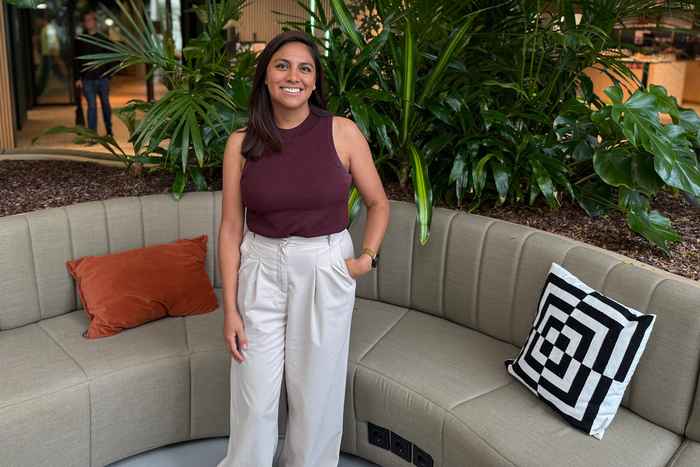
What would you still like to learn in the coming years?
“On a personal level, I would like to improve my writing skills. I enjoy reading C.S. Lewis, especially how he uses language to explain complex ideas and describe topics like joy, faith, grief, or love. I want to learn to express my own ideas in a more eloquent and inspiring way. Professionally, I would like to become better at facilitating collaborations. One of the main challenges for the energy transition is to have effective communication between people from different disciplines, perspectives, and interests. I want to learn how to facilitate meaningful dialogue based on curiosity, empathy, and a willingness to learn from one another.”
Who is your greatest hero in science, and why?
“Not long ago, I watched the movie Hidden Figures, which is based on a true. The film follows three women who worked at NASA during the Space Race and shows the challenges they faced because of their race and gender. What I admire about these women is their steadfastness and determination to keep pursuing their goals despite the obstacles they encountered.”
Where are you heading after completing your PhD?
“This is still a mystery for me, since I still have to find a new job. But during my PhD, I really enjoyed supervising MSc students, so I would like to keep this as part of my job. Students' curiosity and desire to make a change really inspire me. I also found it very rewarding to support their development and witness how much they learn and progress.”