When Macroeconomics Meets Society: Learning from Wartime Ukraine at IAS
Blog by Alumni Fellow Oleksandra Moskalenko
19 August 2026
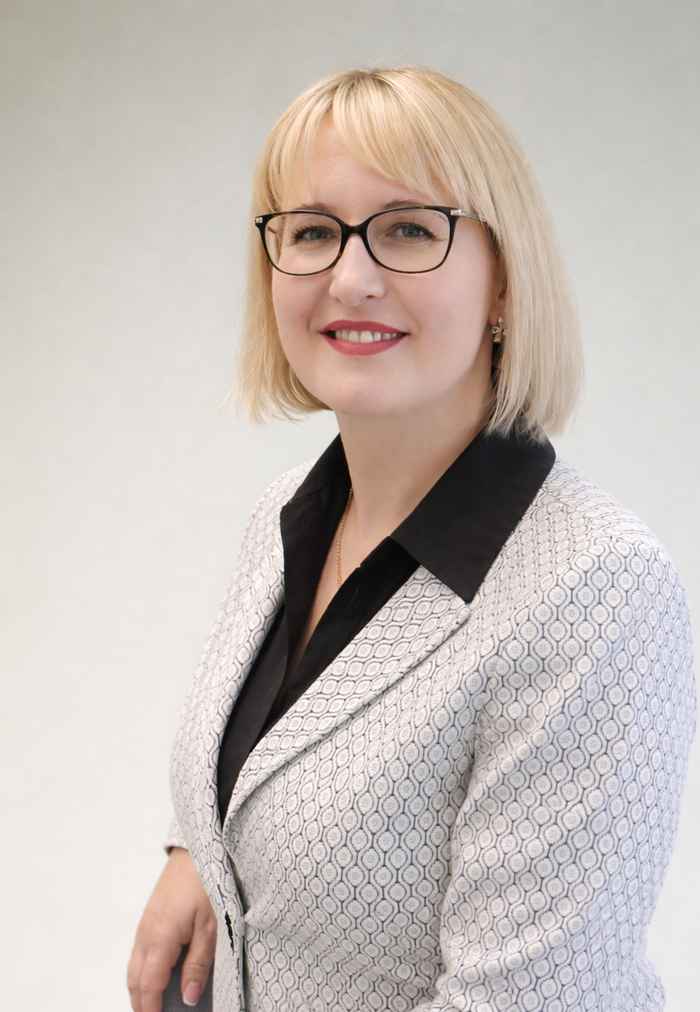
My IAS fellowship gave me the intellectual space to investigate this question beyond the boundaries of my own discipline. I came to IAS as a macroeconomist and political economist working on fiscal and monetary policy coordination in wartime Ukraine, as well as on broader research questions concerning how to sustain the economy and society during war and support the country’s reconstruction and recovery. My research asks how a state can maintain a functioning economy when destruction is continuous, uncertainty is extreme and the conventional assumptions of peacetime policymaking no longer hold. It examines how fiscal and monetary authorities coordinate their decisions, how policy credibility is preserved, how households and institutions adapt, and how international financial assistance interacts with domestic policy.
Ukraine presents a tragic but analytically powerful case. Following one of the largest shocks experienced by a European economy in recent history, the country’s banking system continued to operate, public services continued to be financed and macroeconomic stability, although fragile and costly, was preserved. Understanding why requires more than measuring inflation, output or budget deficits. It requires us to study the economy as part of a wider system in which security, governance, expectations, displacement, social cohesion and external support are deeply interconnected.
This is why the interdisciplinary environment at IAS mattered so much to my work. Interdisciplinarity is sometimes presented as the simple act of bringing different specialists into the same room. In practice, it demands something more difficult: the willingness to expose one’s assumptions, language and methods to people who do not automatically share them. At IAS, I could test not only whether my arguments were technically convincing, but also whether the questions I was asking were intelligible and important to researchers working in other fields.
Questions from outside economics often revealed dimensions of the problem that a specialist discussion might leave implicit. What does “stability” mean when millions of people have been displaced? Whose resilience is being measured? How does prolonged uncertainty alter behaviour, trust and expectations? When does international assistance strengthen domestic policy credibility, and when can dependence on future support create new vulnerabilities? Such questions did not pull the project away from macroeconomics. They helped me identify more precisely what the macroeconomic analysis needed to explain.
The fellowship also allowed me to present the project in two distinct academic settings. At my IAS fellowship event, “Can Economic Policy Prevent Collapse During War? The Ukrainian Case”, I discussed the research with an audience drawn from different disciplines. The conversation tested the wider meaning and societal relevance of the project and challenged me to communicate complex economic mechanisms without losing analytical precision. I was able to see how scholars outside my field perceived the research puzzle, which consequences they considered most urgent and where they saw the greatest need for further explanation.
I also presented the work at a specialist seminar for macroeconomists and PhD researchers in the Macro and International Economics Section of the UvA Faculty of Economics and Business. The seminar was titled “Fiscal–Monetary Coordination under War: The Political Economy of Macroeconomic Stabilisation in Ukraine”. The discussion was narrower in disciplinary scope but deeper in its engagement with economic theory, identification and methodology. This combination was particularly valuable. The interdisciplinary event tested the argument’s broader relevance, while the specialist research seminar examined its theoretical and methodological foundations. Together, they strengthened both the academic contribution and the policy relevance of the research.
I am deeply grateful to my UvA co-applicant, Professor Franc Klaassen, for his intellectual engagement and support, and to colleagues in the Macro and International Economics section for welcoming me into their academic community. Working across IAS and the Faculty of Economics and Business demonstrated how a fellowship can create a productive bridge between an open interdisciplinary space and a highly specialised research environment.
IAS itself offered an unusual combination of freedom, seriousness and warmth. Fellows could develop their own projects while participating in research groups, lectures, workshops and informal conversations that opened unexpected connections. People listened carefully. Ideas could be explored before they were fully resolved, yet they were always met with professional curiosity and constructive challenge. The supportive guidance of the IAS team made this possible. I am particularly thankful to Director Huub Dijstelbloem, Institute Manager Julia Hoffmann, Communication Advisor Jayshri Murli and the wider IAS staff for creating an environment in which fellows felt both intellectually supported and personally welcome.
For me, this experience carries particular meaning as a Ukrainian scholar. Ukraine’s universities and research institutions are working under the pressure of war while also contributing to the country’s democratic future and European integration. Interdisciplinary research is not a luxury in this context. It can strengthen resilience by connecting economic analysis with questions of institutions, law, public administration, history, identity, security and social cohesion. These connections are essential for understanding not only how Ukraine survives the war, but also how it can rebuild a capable, inclusive and European state.
I return to the Ukrainian academic community with a stronger commitment to advancing this agenda in research and education. The IAS experience has shown me how much becomes possible when scholars are given the space to ask difficult questions across disciplinary boundaries, and when every participant is treated as someone whose perspective may change the conversation. I also leave with greater confidence in bringing research into policy debates. Testing my ideas in a demanding but collaborative environment helped me clarify the research puzzle, distinguish strong claims from assumptions and understand more clearly where economic analysis can contribute to public decision-making.
A fellowship is often described through its outputs: a working paper, a seminar, a new model or a future collaboration. These matter. But the deeper value of my time at IAS lies in how it changed the way I frame the problem itself. It reminded me that the strongest economic questions are rarely only economic, especially when a society is confronting an existential threat.
The fellowship also brought remarkable people into my life—colleagues who became friends, interlocutors and supporters. I leave IAS with a stronger research project, a wider intellectual community and a renewed sense of responsibility for what scholarship can do. In wartime, knowledge cannot stop destruction. But it can help societies understand the choices before them, preserve institutions under pressure and imagine a resilient future. For that opportunity, and for the people who made it possible, I am profoundly grateful.