How metal–organic frameworks reshape enzyme structure and activity
29 September 2026
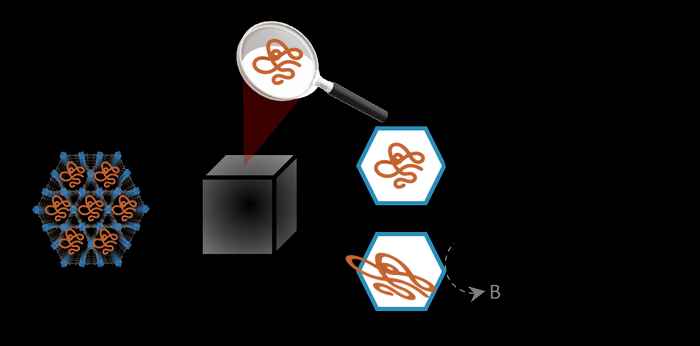
Beyond demonstrating the impact of confinement on enzyme activity, the study provides fundamental insights into how protein-framework interactions influence the conformation and catalytic performance of proteins. Understanding these relationships is essential for the rational design of enzyme-based materials as efficient and robust biocatalysts for sustainable chemical synthesis in practical, industrial applications.
The research was conducted in a collaboration between the groups of Bettina Baumgartner at the UvA’s Van ’t Hoff Institute for Molecular Sciences (HIMS) and Tatjana Parac-Vogt at the Department of Chemistry of KU Leuven. Siene Swennen, a PhD student of Parac-Vogt and first author of the JACS paper, spent six months in the research group of Baumgartner where the spectroscopic investigations were carried out. The study aligns with the focus of the Baumgartner group on understanding molecular interactions and catalytic processes in confined environments. It also contributes to HIMS’ broader research ambitions in sustainable chemistry. Financial support was provided by KU Leuven, the Dutch Research Council (NWO), the Austrian Science Fund (FWF), and the Research Foundation Flanders (FWO).
Abstract, as published with the paper
Enhancing the robustness of functional proteins remains a central challenge in biotechnology, with implications for catalysis, pharmaceuticals, and industrial synthesis. Enzyme immobilization in porous materials such as metal–organic frameworks (MOFs) is widely used to enhance enzyme stability; however, the structural state of proteins within these environments is poorly understood and is often assumed to remain largely unchanged. Since enzyme functionality is closely linked to its 3D conformation, the lack of detailed structural information makes the design of enzyme@porous systems largely empirical.
In this work, we demonstrate that in situ attenuated total reflectance infrared spectroscopy is a powerful tool for monitoring protein adsorption and confinement in the Zr-based MOF NU-1000. By tracking characteristic amide bands, we monitor changes in protein vibrational signatures that reflect alterations in protein structure and local environment during interaction with the framework. Our results reveal that MOFs are not passive hosts but can induce pronounced perturbations in the protein structure upon adsorption and confinement. We identified a framework-sensitive spectroscopic signature associated with protein uptake into the MOF pore environment and support this assignment through uptake kinetics, diffusion analysis, pore-size controls, and protease accessibility experiments. Protein uptake is governed not only by size compatibility but also by electrostatic interactions, ionic strength, and protein conformational state. Importantly, these immobilization- and confinement-associated structural perturbations correlate with changes in catalytic activity: enhanced catalytic activity for dynamically perturbed proteins and reduced activity for structurally constrained systems.
These findings support a relationship between protein–MOF interactions, structural perturbation, and enzymatic function and provide guidelines for tuning protein behavior in MOF-based biocatalysis, separations, and sensing applications.
Paper details
Siene Swinnen, Maxim Lox, Marika Di Berto Mancini, Kilian Declerck, Francisco de Azambuja, Tatjana N. Parac-Vogt, Bettina Baumgartner: Folding within Frameworks: Confinement in Zr-MOFs Reshapes Enzyme Structure and Catalytic Activity. Journal American Chemical Society 2026. DOI: 10.1021/jacs.6c11124
See also
Research Bettina Baumgartner: Reactions in Confined Spaces
Research Tatjana Parac-Vogt: Laboratory of Bioinorganic Chemistry