Towards high-speed analysis of chiral compounds
16 October 2026
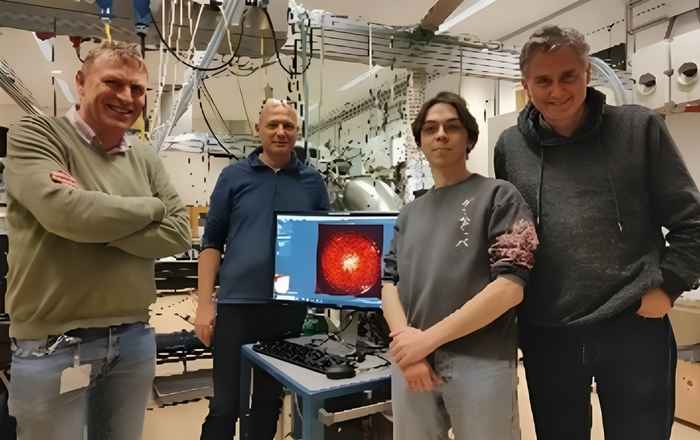
In the wake of the announcement of the Nobel Prize for Chemistry, which once again highlights the relevance of chirality, the project underpins how the detection and analysis of chiral molecules is crucial to many fields. Since the two mirror images of chiral molecules (enantiomers) have completely different biological responses, they have distinctly different effects when it comes to smell, taste, pharmaceutical response and crop protection. This has already led to the development of chiral analytics for industries in Flavors & Fragrances, Pharmaceuticals and Agrochemicals.
Adding to this, over the last years there has been a surge in interest in chiral fingerprinting of metabolites and amino acids for biomarker disease diagnostics and monitoring. The project of Prof. Buma and collaborators particularly caters to this need. It has started this month with funding from the KIEM HighTech programme from the Dutch national Taskforce for Applied Research SIA and features collaboration with dr. Maurice Janssen of the company MassSpecpecD (Enschede, the Netherlands), and dr. Ivan Michel Antolovic of the company Pi Imaging Technology (Lausanne, Switzerland).
Ultrasensitive, high-speed analysis
The project entails the development and demonstration of ultrasensitive instrumentation using advanced laser-based molecular spectroscopy to measure enantiomeric excess (ee) in biomarkers, such as chiral volatile organic compounds (c-VOC) and chiral amino acids (c-AA). It aims to integrate and further develop two high-tech instrumental technologies: Single Photon Avalanche Diode (SPAD) imaging cameras with Mass Spectrometry-PhotoElectronChiralDichroism (MS-PECD) laboratory technology. The combined technology will then be applied for the detection of chiral molecules as potential biomarkers for early diagnostics in diseases like cancer, long infections and malaria.
In a broader perspective, the combined technology will also be of relevance to the industry sectors mentioned earlier, as it features high accuracy, high enantiomer sensitivity, high sample-throughput and high measurement speed. This is crucial to quality control labs as well as R&D on chiral molecular compounds. Furthermore, the novel technology will reduce the amount of chemical waste in comparison to current technology.
Building on academic expertise
According to Buma, the project ties in seamlessly with his research in recent years. “In our study of electronically excited states, in particular of UV-absorbing molecules, we have ample experience in combining multiphoton ionization techniques with photoelectron spectroscopy. Another part of our research is on chiral spectroscopic techniques to determine the absolute configuration of chiral molecules in solutions. We have, for instance, much expertise in vibrational circular dichroism and are working on new methods for fast and reliable chiral analysis. I’m excited to collaborate with the two industrial partners on this new technology that has the potential to revolutionise chiral analytics.”