Children’s toys need to be safer and more sustainable
NWA funding for TOYS consortium
9 November 2026
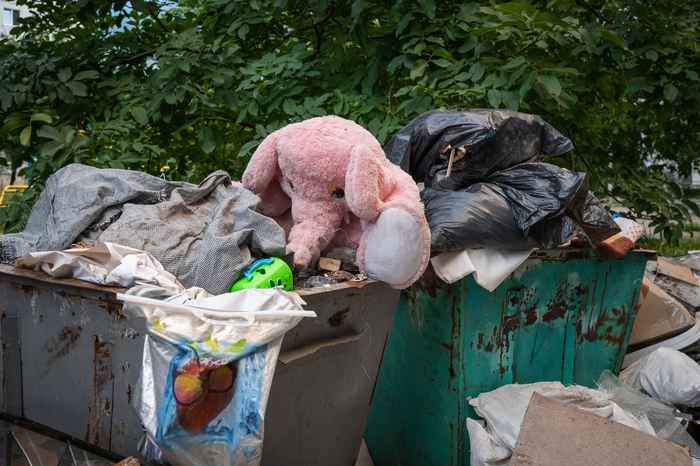
More than 90 percent of toys are made from virgin plastic derived from fossil-based raw materials, and they often have a short lifespan. Due to their mix of materials, recycling is often difficult; furthermore, there are persistent concerns regarding environmental impact and the potential harm that certain substances may pose to children. Making toys more sustainable and safer is not simply a matter of replacing conventional plastics with bio-based alternatives: materials must be safe, durable, reusable and easily recyclable.
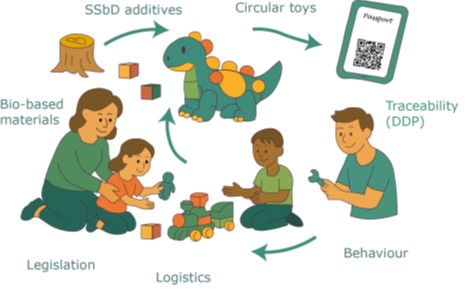
'Behind an ostensibly simple building block or stuffed toy lies an entire chain of choices,’ explains project leader Chris Slootweg, professor of Circular Chemistry at the UvA. ‘TOYS will examine that entire chain – from molecule to box in the store – and what happens to the material afterwards.’
The 54-month project ‘TOYS: Transforming Toys through Materials, Design and Behaviour’, will see 34 organisations collaborating, bringing together expertise in materials science, chemistry, toxicology, product design, behavioural science, economics and law. The UvA will lead the consortium, while the Materials Innovation Institute (M2i) will provide support in areas such as project management, partner engagement and communication.
Safer, more sustainable materials
TOYS consists of several subprojects. The first, in which Slootweg and his colleagues from the UvA’s Van 't Hoff Institute for Molecular Sciences play a central role, focuses on the development of new polymers and additives for toys. The researchers are working on bio-based and highly recyclable alternatives to conventional plastics, as well as safer colorants, flame retardants and other functional additives. In doing so, they follow the "Safe-and-Sustainable-by-Design" approach: chemical safety, environmental performance and functionality are considered together from the very first design stage. Experimental materials research is combined with artificial intelligence and molecular modelling.
‘We will look, among other things, at how additives behave within materials, and whether any harmful substances are released during use – for instance, if a material breaks or comes into contact with saliva,’ explains Slootweg. ‘Our goal is to develop and characterise at least four promising new material systems, which can subsequently be tested.’
Circular toy ecosystems
Better materials are the first step. Beyond that, the entire ecosystem must evolve to make toys more sustainable. For this reason, TOYS is exploring how circular design principles can be integrated into toy development – for example, through modular designs, repairability, careful material selection and new methods for collecting and redistributing used toys. Furthermore, the TOYS researchers will develop Digital Product Passports, which provide reliable information regarding a product’s composition, safety and potential for reuse or recycling.
The role of families and society
The extent to which circular toys gain broad acceptance also depends on how people purchase, use, share and dispose of them. For this reason, TOYS will also examine the role of families and society. The researchers will investigate the perspectives of parents and other consumers regarding bio-based and second-hand toys, the factors that influence their purchasing decisions, and what makes repairing, reusing and sharing either more attractive or more difficult. This includes looking at the role of product information, pricing, social norms and legal requirements.
Putting it into practice
The results of all the sub-projects will ultimately culminate in four demonstration models of toys, including both hard toys (such as building blocks) and soft toys (stuffed animals). These will allow the researchers – in collaboration with manufacturers, retailers, consumer organisations, families and regulators – to test the new materials, circular design strategies and product information systems in real-world usage scenarios.
‘The strength of TOYS lies in the fact that we aren’t just looking at the material; we’re also examining the product, the family and the surrounding regulatory framework,’ concludes Slootweg. ‘Everything is interconnected, and that is how we can truly drive change throughout the entire supply chain.’
NWA funding for ten additional large-scale projects
In this round, eleven consortia within the NWA’s ‘Research Along Routes by Consortia’ (ORC) programme line have been awarded funding. Each consortium will receive approximately 7.4 million euros. Researchers from the UvA and Amsterdam UMC (AMC location) are participating in seven of these eleven consortia. In addition to TOYS, these include:
- ‘Living Planet – How life and planet are interdependent and co-evolving: an interdisciplinary approach’ (led by the University of Groningen)
- ‘Human- and Artificial-Intelligence advancing Quantum Technology’ (led by Leiden University)
- ‘RESOLVE: Resolving the standstill between water, nature and agriculture’ (led by the Netherlands Institute of Ecology)
- 'ROOTS1000 – Research on Opportunities for Optimal Thriving and Scalability in the First 1000 Days’ (led by Erasmus University Rotterdam)
- ‘New symmetries and synergies: Connecting science and society’ (led by Vrije Universiteit Amsterdam)
- ‘SHIELD: Social Media’s Harmful Impact and Effective Long-term Depolarization’ (led by Wageningen University & Research)