Scrapping property transfer tax would increase household welfare without damaging prices
24 September 2026
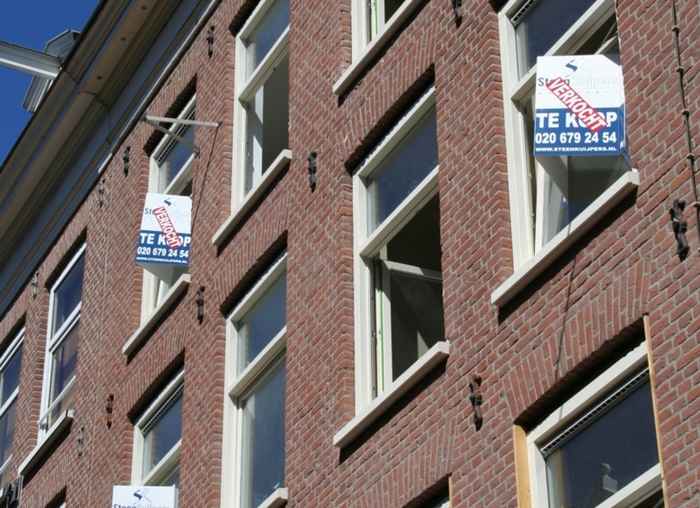
The Netherlands reduced the transfer tax on owner-occupied homes from 6% to 2% in 2011, and since 2021 younger first-time buyers have been able, under certain conditions, to qualify for a full exemption.
Completely abolishing transfer tax
Schmidt’s model suggests that abolishing the transfer tax altogether, and replacing the lost tax revenue with a recurring tax on property, would increase household welfare and make homeowners considerably more likely to move. Residential mobility rises by around 40% under Schmidt’s model. At the same time, the effects on house prices, rents and the overall homeownership rate are small.
How the tax cut is financed matters, however. Schmidt finds that replacing transfer-tax revenue with higher income taxes would reduce welfare, because the costs would fall disproportionately on lower-income households. It could also push up house prices and rents if it were not accompanied by a corresponding tax on property.
The findings illustrate why the effects of a housing tax cannot be judged simply by looking at the amount of tax collected. A tax on transactions can also change people's behaviour, in this case influencing whether and when homeowners move.
'Transfer tax can clog up the system by affecting how willing existing homeowners are to move.'Daniel Schmidt
‘The transfer tax is a cost you pay at a very specific moment: when you buy a new home,’ says Schmidt. ‘That can make people reluctant to move, even when a different home would suit them better. So the tax doesn’t just affect whether people buy a home in the first place; it can also clog up the system by affecting how willing existing homeowners are to move.’
Uninsured against floods
Schmidt’s dissertation also examines two other similarly consequential financial decisions, showing how households respond to financial shocks when they have different options available to them.
One study examines why many US homeowners in areas at high risk of flooding do not have flood insurance. Fewer than half of homeowners in the highest-risk zones are insured, despite subsidised government insurance.
Schmidt’s model finds that access to liquidity explains most of the low take-up. What matters is a household’s ability to draw on savings and, crucially, on government programmes such as disaster loans, penalty-free retirement withdrawals and mortgage relief after a flood.
‘People who remain uninsured are not necessarily ignoring the risk,’ says Schmidt. ‘They may have other ways of absorbing the financial shock when a flood happens. The availability of liquidity changes the value that insurance provides.’
Unexpected windfalls
Finally, Schmidt looks at the spending behaviour of older workers and retirees after they receive an unexpected financial windfall. Schmidt finds that older workers spend less of such a windfall than retirees. The explanation is not simply that older workers are more inclined to save. Rather, they have another option that retirees no longer have: they can use the extra money to retire earlier.
‘If you’re still working, a windfall gives you another option besides spending or saving: you can buy yourself more time,’ says Schmidt. ‘Part of the money is effectively being converted into earlier retirement rather than consumption.’
Same policies, different households
Together, the three studies show how financial decisions are shaped not only by income and wealth, but also by the options households have for responding to changing circumstances.
‘The same policy can affect households very differently, because people are not starting from the same financial position,’ says Schmidt. ‘Their wealth and exposure to risk shape the choices available to them, and those choices can ultimately determine whether a policy improves or reduces their welfare.’
Note: Daniel Schmidt is currently an economist at De Nederlandsche Bank. The views expressed in this research and in this press release are his own and do not necessarily reflect the position of De Nederlandsche Bank or the Eurosystem.